Africa's First Lunar Mission to Be Carried to the Moon by China in 2029
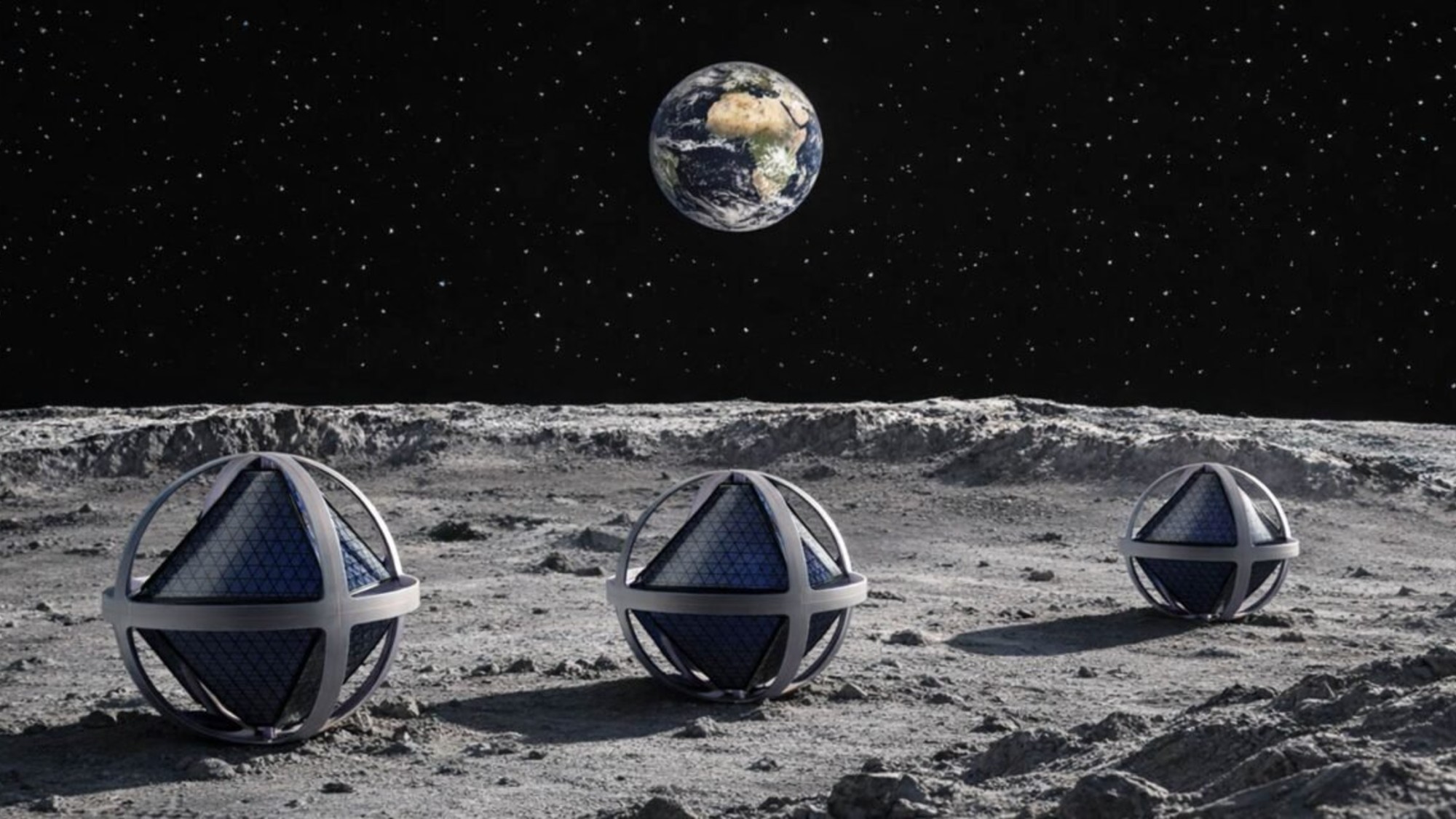
Africa's first space exploration mission — known as BALLS (Bounced African Low Lunar Sphere) — is scheduled to be launched to the Moon's south pole in 2029 aboard China's Chang'e-8 lunar vehicle, marking a historic milestone for African space science.
1.Africa's Historic First Lunar Mission
Africa's first space exploration mission is scheduled to be launched toward the Moon's south pole in 2029 via China's Chang'e-8 lunar vehicle. Operating under the Africa2Moon project, this historic mission is considered a remarkable milestone in African space science history. The announcement marks a new era for the African continent in space exploration, demonstrating that space science ambitions are growing beyond traditional spacefaring nations.
2.What Is the BALLS Mission?
This mission is known by the acronym BALLS — Bounced African Low Lunar Sphere — and operates primarily as a technology demonstration mission. It will establish a radio astronomy system consisting of three spherical test units at the Moon's south pole. These metal spheres contain low-frequency radio telescope antennas, and their primary purpose is to explore signals emanating from the oldest and most distant regions of the universe. The mission represents both a technological achievement and a scientific endeavor that could unlock secrets of the cosmos.
3.Why the Moon's South Pole?
The Moon's south pole region, as well as its far side, are ideal for observing radio waves below 20 MHz — frequencies that cannot be observed from Earth due to interference caused by the ionosphere. This makes the lunar environment uniquely valuable for low-frequency radio astronomy. Carla Mitchell, Director of Operations of the Africa2Moon project and Manager of the South African Radio Astronomy Observatory (SARAO), points out that this will create an ideal space for listening to past signals from the universe without any electromagnetic interference from Earth.
4.International Support and Selection
This special project was selected in April 2025 by the China National Space Administration under their international payload program. Led by the Foundation for Space Development Africa and SARAO, it also receives active support from institutions in several African countries including Kenya, Ghana, and Botswana. The international collaboration demonstrates a new model for space science participation that allows emerging space nations to contribute to cutting-edge lunar research through strategic partnerships.
5.Future Plans: A Full 55-Antenna Array
Following the success of this initial technology demonstration mission, plans are also in place to install a full Africa2Moon mission consisting of 55 antennas on the Moon in the future. This ambitious full-scale deployment would transform the lunar surface into a major radio astronomy observatory, potentially capable of observing the universe's 'Dark Ages' — the period before the first stars formed — in unprecedented detail. The BALLS mission serves as the critical first step toward this much larger scientific goal.
6.Significance for African Space Science
Africa's participation in lunar exploration through the Africa2Moon project sends a powerful message to the global scientific community. The continent — home to the world's most advanced radio telescope facility, the Square Kilometre Array (SKA) — is asserting its place in 21st-century space science. The mission not only advances Africa's scientific capabilities but also inspires the next generation of African scientists, engineers, and space entrepreneurs to pursue careers in astronomy, aerospace engineering, and technology development.
Editorial Standards & Fact-Checking Transparency
This report adheres to Daily Science News' rigorous academic guidelines. All claims are verified against primary scientific literature from institutions including NASA, ESA, CERN, and peer-reviewed journals. Supervised by Dulaksha Sandeepa. Questions or corrections? Contact contact@sciencenewshub.click.