Cybersecurity Tips for 2026: Why 99.9% of People Fall for AI Voice Clones & The New Zero-Trust Verification Rules
As Cybersecurity Awareness Month 2026 kicks off, intelligence disclosures and enterprise surveys reveal a startling crisis: 99.9% of individuals cannot distinguish an AI voice clone from reality, while generative phishing volume has exploded by 1,000%. With traditional 'tells' like typos and awkward audio cadences erased by modern LLMs, cybersecurity agencies and researchers are demanding a total transition to Social Engineering Defense (SED) and Zero-Trust verification protocols. Here is your definitive forensic guide.
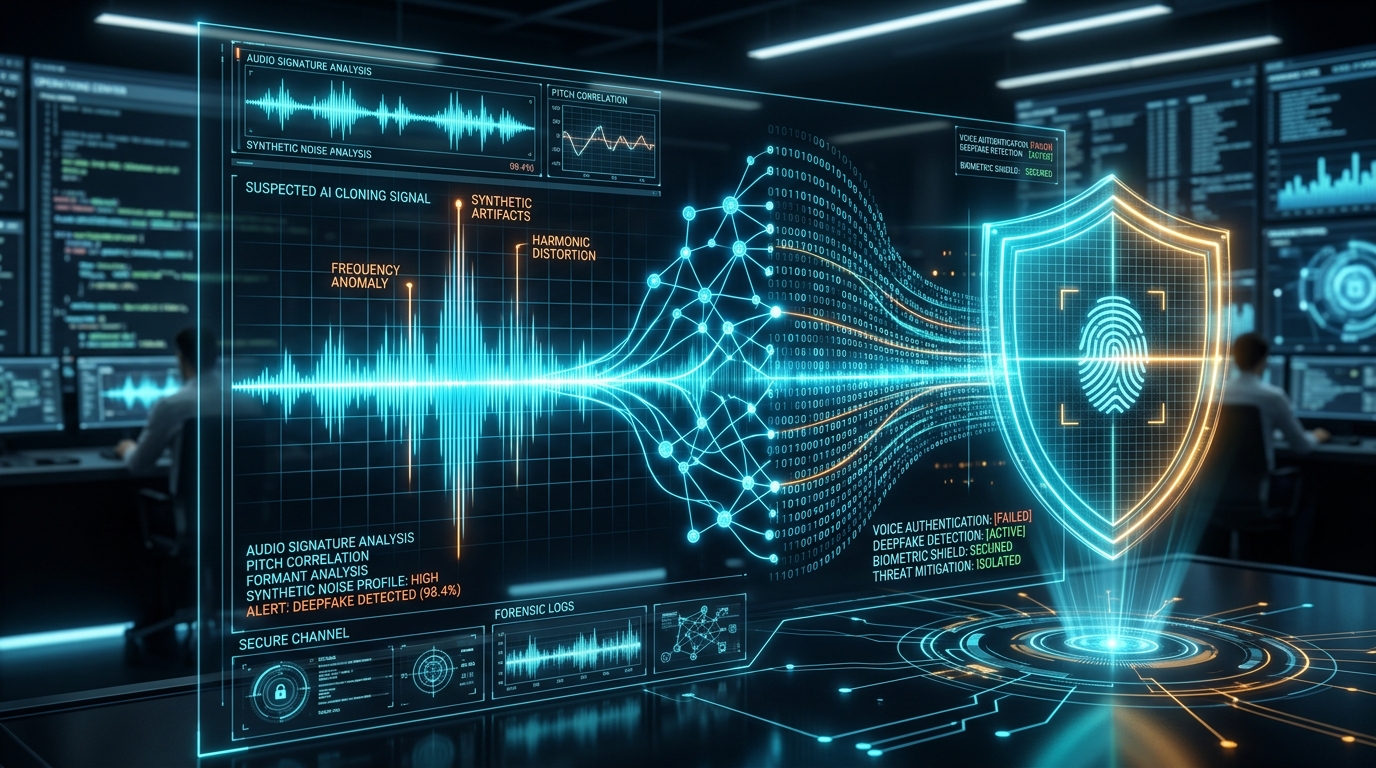
1.The Collapse of Sensory Trust: Why 2026 Is a Turning Point
Every October, organizations and government agencies observe Cybersecurity Awareness Month to recalibrate their digital defenses. But in 2026, the cybersecurity conversation has shifted violently away from legacy malware signatures and onto an unsettling psychological reality: the human sensory floor has completely collapsed.
For two decades, corporate training and consumer cybersecurity tips instructed users to hunt for telltale signs of fraud: grammatical errors in phishing emails, awkward synthesized voice cadences, unnatural pauses, or pixelated artifacts around a caller's neck during video conferences.
Those historic tells are officially dead. Powered by frontier generative models, automated speech-to-speech converters, and multimodal generative adversarial networks (GANs), synthetic impersonations have achieved photorealistic and acoustic parity with biological humans. Today, an adversary needs as little as three seconds of uncompressed audio—harvested from an Instagram reel, a corporate webinar, or a voicemail greeting—to synthesize a voice clone capable of laughing, sighing, and mimicking granular regional accents in real time.
2.The Alarming 2026 Metrics: 99.9% Failure Rate in Blind Audits
The vulnerability of modern organizations is not speculative; it is confirmed by staggering empirical disclosures from leading cybersecurity research institutions:
• 99.9% Undetectable by Human Ears: According to a landmark 2026 Gartner cybersecurity survey, 99.9% of everyday internet users and corporate employees cannot reliably distinguish an AI-synthesized voice clone from a genuine human speaker. • 100% Social Engineering Success: In a controlled red-team drill conducted by security intelligence firm Doppel across 100 corporate employees, an AI voice clone impersonating the organization's Chief Information Security Officer (CISO) successfully convinced 100% of participants, holding active phone conversations for an average of 6 minutes before any employee grew suspicious. • 62% of Enterprises Targeted: Over 62% of mid-market and Fortune 500 enterprises confirm they have already experienced direct deepfake impersonation attempts targeting executive management, IT help desks, or financial controllers. • 1,000% Phishing Surge, 95% Cost Collapse: While generative phishing volume has exploded by more than 1,000% year-over-year, the commercial compute cost for adversaries to deploy hyper-personalized voice and video lures has plunged by over 95%.
"The thing society spent generations learning to trust—a familiar voice over the phone, a known executive face on a Zoom screen, a distinctive conversational cadence—is no longer proof of identity," notes security researcher Alyssa Smrekar. "If detection based on human perception is your only firewall, you have already lost the breach."
3.Traditional Defenses Are Failing: The Rise of Social Engineering Defense (SED)
The fundamental flaw in legacy cybersecurity awareness programs is the assumption that fakes will always carry detectable flaws. When large language models craft grammatically flawless communications and real-time voice transformers mask latency, asking an employee under extreme deadline pressure to 'spot the fake' is asking for catastrophic failure.
Industry statistics indicate that the average employee clicks a sophisticated phishing link or obeys an urgent request within 60 seconds of receipt. Furthermore, data breach investigations reveal that social engineering attacks now boast the longest dwell time of any cyber threat category—averaging a grueling 260 days before internal security operations centers (SOCs) discover and contain the intrusion.
To mitigate this, the global security architecture is pivoting toward Social Engineering Defense (SED). Rather than viewing an impersonation call as an isolated event, SED treats cyber impersonation as a structured, multi-stage attack chain: 1. Reconnaissance & Harvester Phase: Scrapes employee vocal samples from YouTube and TikTok, maps executive organizational hierarchies, and purchases lookalike domains. 2. Synthetic Model Fine-Tuning: Trains low-latency neural acoustic models on specific dialect quirks and company jargon. 3. Out-of-Band Delivery: Executes the call or message during high-friction windows (quarter-end closings, late Friday afternoons, or emergency IT outages).
4.Brilliant at the Basics: Foundational Cybersecurity Tips for 2026
While generative AI represents an unprecedented adversary, cybersecurity leaders—including the U.S. Department of War CIO Kirsten Davies in their 'Brilliant at the Basics' October initiative and the Wisconsin Department of Administration—emphasize that flawless execution of core cyber hygiene nullifies over 85% of automated attacks:
1. Power Up to FIDO2 Passkeys & Eliminate Password Re-use: Static passwords remain the single greatest liability in modern computing. When threat actors compromise a single credential database, automated credential-stuffing engines test those combinations across thousands of consumer and banking portals. Transition immediately to hardware-backed FIDO2 passkeys or encrypted password vaults, enforcing mandatory Phishing-Resistant Multi-Factor Authentication (MFA) using authenticator apps or hardware keys (such as YubiKeys) rather than easily intercepted SMS codes.
2. Think Before You Link (The 10-Second Friction Pause): Cybercriminals weaponize urgency, panic, and authority. Whether receiving a text alleging an unpaid toll bill, an email from a courier claiming a stalled parcel, or a Teams message from the CEO demanding an urgent gift-card wire, force a mandatory 10-second cognitive pause. Never click embedded hyperlinks or download attachments directly. Manually type the verified domain URL into your browser address bar.
3. Automated Patching & The 3Rs Framework: Unpatched software vulnerabilities represent an open door for remote code execution. Enable automatic updates across operating systems, mobile firmware, and browser extensions. Enterprises must adopt the 3Rs of Cybersecurity: • Reduce attack surfaces by decommissioning unused public-facing endpoints. • Replace legacy devices and operating systems that have reached End-of-Life (EOL). • Recover rapidly by maintaining immutable, air-gapped data backups.
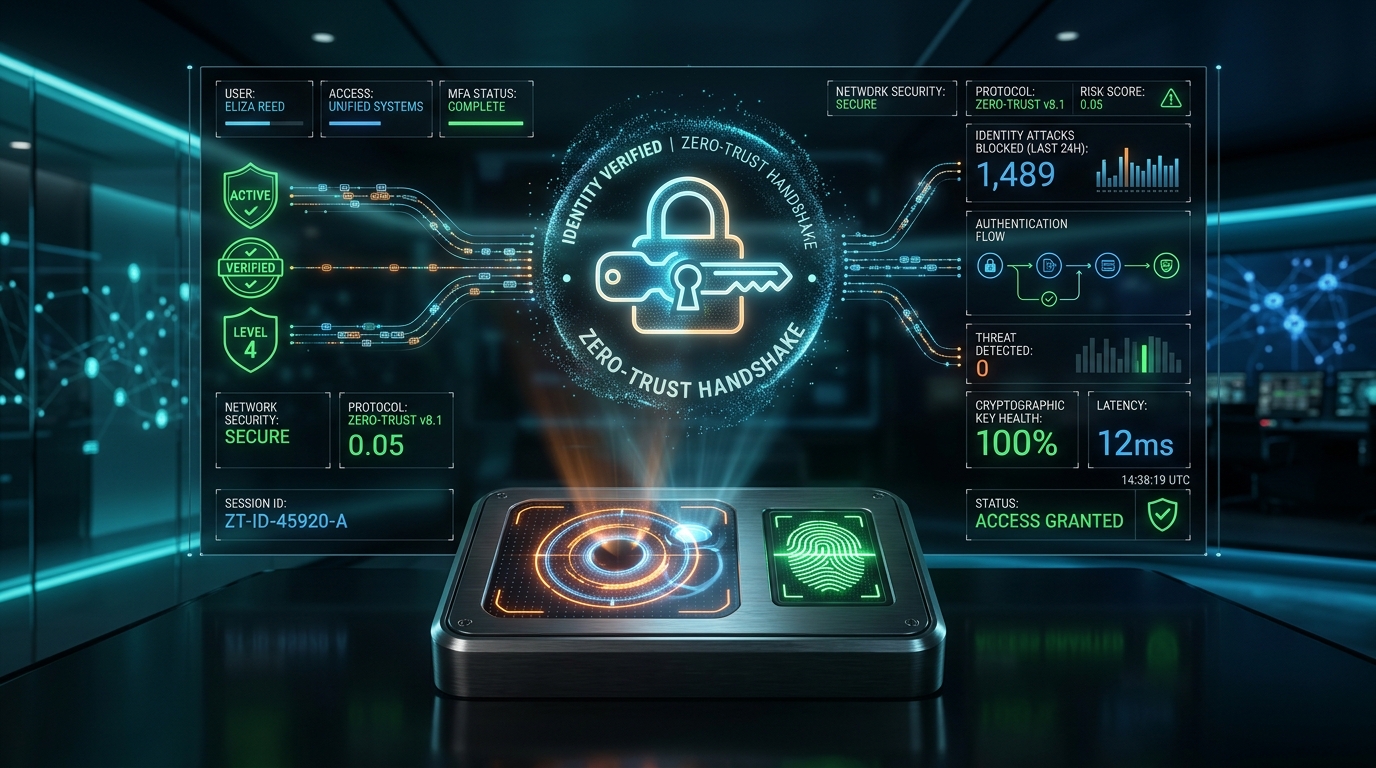
5.The Zero-Trust Verification Protocol: 4 Rules to Outsmart AI Impersonators
For both families and multinational corporations, navigating an era of synthetic media requires replacing 'instinct' with an inviolable verification protocol:
Rule 1: Establish Out-of-Band (OOB) Challenge-Response Channels If a supervisor, vendor, or financial institution contacts you via voice call or chat requesting financial transfers, credential resets, or sensitive data, hang up immediately. Re-initiate contact through a pre-verified, secondary channel (e.g., calling their verified direct desk extension, pinging their internal encrypted Slack channel, or requesting a cryptographically signed email ticket).
Rule 2: Implement Analog Family & Executive Duress Codes In consumer kidnapping scams and corporate executive fraud, attackers synthesize a loved one's distress or a CEO's urgent command. Families and executive teams should establish a secret, offline verbal safe word—never written in digital notes or emailed—that must be spoken to confirm emergency validity.
Rule 3: Enforce Multi-Party Dual Control on All Capital Transfers No individual employee—regardless of seniority—should possess unilateral authorization to wire funds or alter bank account routing numbers. Instituting dual-authorization workflows with independent multi-party approvals completely neutralizes deepfake voice vishing attacks targeting single financial controllers.
Rule 4: Assume Voice and Video Are Public Data Recognize that your voice, likeness, and digital communication style are effectively public commodities. Configure privacy settings across social platforms, avoid publishing high-resolution audio/video of children and unconsenting personnel, and treat all unsolicited incoming communications with disciplined skepticism.
6.Frequently Asked Questions (FAQ) for Cybersecurity Awareness Month 2026
Q: Can banking voice biometrics still protect my account in 2026? A: Financial institutions that rely solely on legacy voice biometrics ("my voice is my password") are facing severe security liabilities. Leading global banks have transitioned to behavioral biometrics (measuring typing rhythm and touch pressure), device telemetry, and hardware-bound tokens. If your bank still uses voice authentication, contact their security desk to enable secondary hardware security keys or traditional multi-factor authentication.
Q: How can I tell if a phone call from my family member is an AI clone? A: Ask open-ended, contextual questions that an AI model scraping public social media wouldn't know. Avoid yes/no questions. Ask about a specific childhood memory, what you ate for dinner three nights ago, or request your pre-agreed family safe word. If the caller deflects, panics, or repeats urgent demands for gift cards or crypto wires, terminate the call and dial their direct phone number immediately.
Q: Are deepfakes illegal, and how are regulatory bodies responding? A: In 2026, legislative frameworks in the United States, European Union (EU AI Act), and Asia-Pacific impose stringent criminal penalties for non-consensual voice cloning, financial fraud impersonation, and synthetic identity manipulation. However, because foreign threat syndicates frequently operate from non-extradition jurisdictions, technological and procedural self-defense remains your most reliable safeguard.
Editorial Standards & Fact-Checking Transparency
This report adheres to Daily Science News' rigorous academic guidelines. All claims are verified against primary scientific literature from institutions including NASA, ESA, CERN, and peer-reviewed journals. Supervised by Dulaksha Sandeepa. Questions or corrections? Contact contact@sciencenewshub.click.