The FBI Data Breach Is a Counterintelligence Disaster: ShinyHunters Hack Exposes Secret Hacking Unit, Sensitive Medical Records & Covert Operatives
In what intelligence veterans compare to the catastrophic 2015 OPM breach, cybercriminal syndicate ShinyHunters has reportedly breached FBI infrastructure, compromising thousands of employee dossiers, psychiatric evaluations, and members of the bureau’s secretive Remote Operations Unit (ROU). Here is the full forensic breakdown of the counterintelligence fallout.
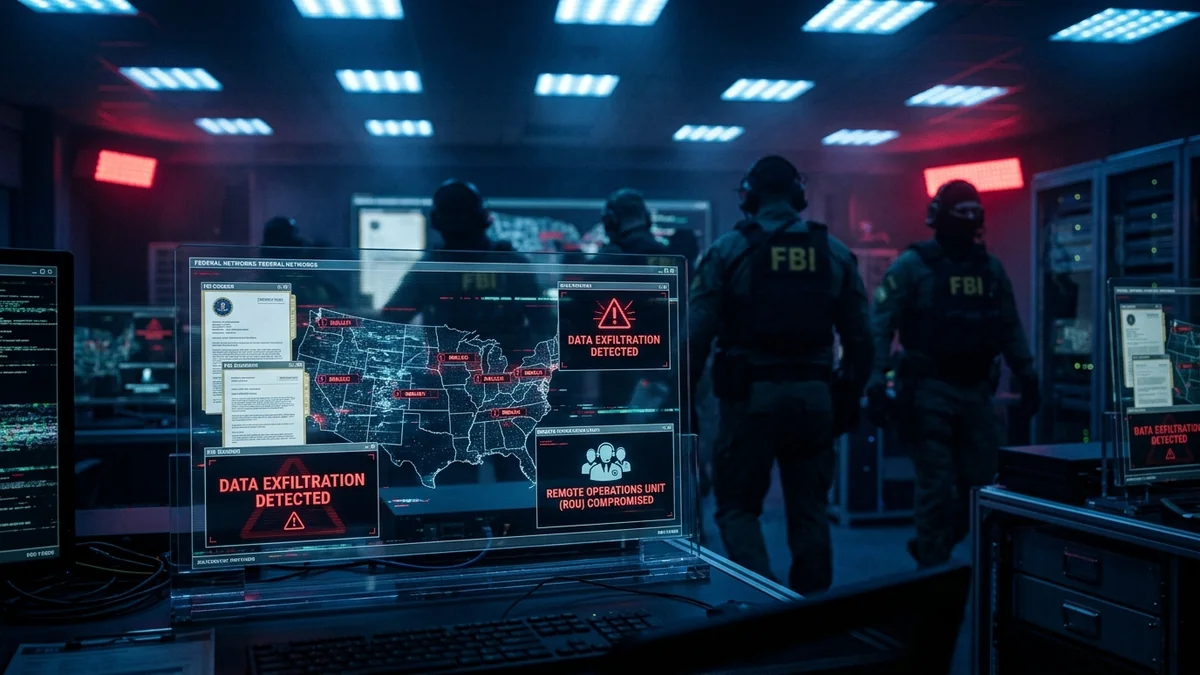
1.Breaking the Perimeter: ShinyHunters Claims Massive FBI Intrusion
On September 23, 2026, the Federal Bureau of Investigation confirmed it is actively investigating a staggering breach claim from the notorious cybercriminal syndicate ShinyHunters.
Boasting to investigative news outlet 404 Media—which originally broke the story—the hacking crew asserted: "We have compromised the FBI. We hold very sensitive data on almost ALL FBI Agents and individuals who filed an application with the FBI for a job."
According to statements provided by the hackers to Reuters and independent cybersecurity researchers, the threat actors reportedly exfiltrated between 2 to 3 terabytes of data. While the bureau previously issued an advisory in May warning that ShinyHunters frequently exaggerates intrusion scopes to extort victims, forensic disclosures and initial samples provided by the group indicate that a deeply alarming quantity of real, highly sensitive government records has indeed been compromised.
The intrusion appears to have breached multiple entry points and contractor-operated portals, including the FBIjobs.gov application ecosystem, internal applicant screening pipelines, the FBI's Background Investigation Contract Services unit, and FBI MedLink—a repository housing medical evaluations and fitness-for-duty clearances for agency personnel.
2.Forensic Authentication: What Stolen Files Reveal
To substantiate their claims, ShinyHunters circulated a sample file spanning approximately 5,000 alleged FBI employees and applicants to independent journalists and technical analysts.
The documents contain granular personal identifiable information (PII), including: • Full legal names, dates of birth, and home addresses • Personal mobile numbers and verified personal email addresses • Details regarding spouses, immediate family members, and emergency contacts • Employment timelines and specific internal FBI office assignments
Subsequent forensic verification by Reuters and 404 Media corroborated that several of the records matched genuine public and private databases. Investigators verified social security numbers from the sample against credit bureau records, cross-referenced the dates of pre-employment psychological screenings against employment records, and confirmed that named clinical evaluators were actively performing contracted psychiatric examinations for the bureau at the time specified in the files.
Most alarming was the revelation that the stolen dataset encompasses deeply personal health records. Documents reviewed by reporters included blood and urine diagnostic panels, electrocardiogram (ECG) readouts, disclosure of daily prescription regimens and severe allergies, and pre-employment psychiatric evaluations noting historical symptoms of depression. The presence of intimate psychiatric files transforms a standard corporate-style breach into an acute national security vulnerability.
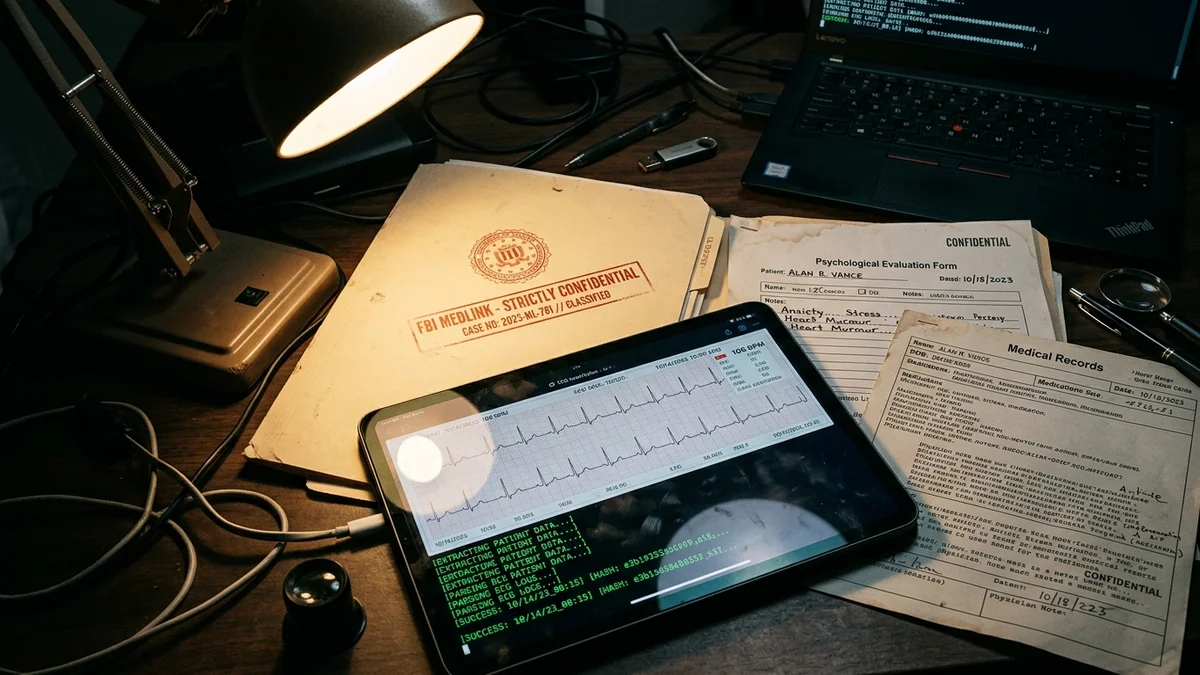
3.Unmasking the Bureau's Secret Hackers: Remote Operations Unit (ROU) Exposed
While the exposure of PII presents immediate physical and cyber risks, reporting from 404 Media uncovered an even more damaging revelation: the breach inadvertently unmasked personnel belonging to the FBI's most secretive cyber offensive squad, the Remote Operations Unit (ROU).
Operating within the bureau’s Operational Technology Division, the Remote Operations Unit is the federal government’s tip of the spear for offensive cyber missions. ROU engineers and operators are tasked with creating custom software exploits, weaponizing zero-day vulnerabilities, and deploying computer network operations (CNO) against foreign adversaries, sophisticated ransomware cartels, hostile nation-state actors, and high-value criminal syndicates.
Historically, the identities, operational parameters, and deployment methodologies of ROU operatives have been guarded with extreme secrecy. In the breached dataset, job descriptions explicitly detailed roles encompassing: • "Remote operations units" and clandestine exploit deployment • "Data intercept" and "telecom intercept" operations • Technical human intelligence (HUMINT) agent management • Active operational portfolios assigned to China, Russia, Iran, Hezbollah, and domestic critical infrastructure protection
For foreign intelligence agencies in Moscow, Beijing, and Tehran, obtaining a roster of the FBI's elite cyber-warriors and technical intercept specialists represents an unprecedented intelligence windfall.
4.A Counterintelligence Catastrophe: Why Hostile Spies Covet This Data
Eric O'Neill, a former FBI operative celebrated for his role in capturing Soviet/Russian mole Robert Hanssen and founder of cybersecurity consultancy Nexasure AI, warned that the magnitude of the incident parallels the devastating 2015 Office of Personnel Management (OPM) breach.
"The presence of medical and psychiatric data is a sign that the hack is approaching the same kind of magnitude as the OPM intrusion," O'Neill emphasized. "I would be shocked if Russian intelligence isn't knocking on their door and saying, 'We want that stuff, hand it over.'"
Foreign adversaries can exploit this compromised data across several critical operational dimensions:
1. Blackmail and Coercion Vectors: Detailed psychiatric evaluations, past mental health diagnoses, marital distress, or undisclosed medical conditions provide foreign intelligence officers with psychological pressure points to recruit assets or coerce compliance. 2. Long-Term Dossier Weaponization: Intelligence is an asymmetric, generational game. Individuals who applied for junior analyst or entry-level special agent roles in 2026 may go on to head field offices, lead counter-espionage divisions, or direct high-level covert operations a decade from now. Having their early dossiers cataloged enables foreign security services to track their entire career trajectories from day one. 3. Micro-Targeted Spear-Phishing: Knowing an agent’s home address, personal phone number, spouse’s identity, and specific division allows hostile nation-state hacking units (such as Russia’s Fancy Bear or China’s Volt Typhoon) to launch hyper-personalized spear-phishing campaigns, intercepting private communications and deploying mobile spyware. 4. Organizational Mapping: By analyzing the naming conventions, team descriptions, and reporting chains inside the leaked files, foreign adversaries can reconstruct the FBI's internal structural hierarchy with surgical accuracy.
5.Physical Security Threats: Doxxing, Swatting, and the Data-to-Violence Pipeline
Beyond the international espionage chessboard, the breach presents an acute, life-threatening danger to FBI special agents, analysts, and their families on domestic soil.
Public servants across the United States have faced an alarming surge in targeted harassment, doxxing, and politically motivated intimidation. When law enforcement officers' residential addresses and family details leak onto cybercrime forums, threat actors immediately exploit them through:
• Swatting Attacks: Malicious actors place fraudulent 911 emergency calls reporting an active hostage situation or violent crime at an agent’s private home, dispatching heavily armed local SWAT teams into a high-stress confrontation. • Retaliation from Cartels and Organized Crime: Agents working narcotics trafficking, transnational gangs, child exploitation, and violent domestic extremism cases are vulnerable to physical surveillance, home invasions, and violent reprisals from targets they have previously investigated or prosecuted. • Commercial Data Broker Aggregation: The stolen FBI data can be easily cross-referenced with commercial "people search" data brokers that harvest consumer geolocation, property deeds, and vehicle registrations, creating an inescapable digital footprint.
Federal security officials must now scramble to provide emergency credit monitoring, home security assessments, digital data scrubbing, and in high-risk cases, physical relocations for compromised personnel.
6.Systemic Policy Failures and the Imperative for Cyber Resilience
As the FBI’s Cyber Division works around the clock to scope the intrusion, cybersecurity scholars point out that this disaster highlights deep structural contradictions in U.S. national security policy.
Writing for Lawfare, cybersecurity fellow Justin Sherman noted that domestic policy choices have increasingly undermined federal cyber defense postures: "Nation-states and cybercriminals can theoretically break into any system at any time; no database or computer is impenetrable. But it certainly doesn't help U.S. cyber defenses when political leaders decide to gut the Cybersecurity and Infrastructure Security Agency (CISA), arbitrarily fire public servants across the national security apparatus, and reassign federal cyber personnel to immigration roundups."
To withstand future intrusions of this magnitude, cybersecurity experts urge immediate structural reforms: • Total Vendor Supply-Chain Hardening: Federal contracting rules must enforce strict "secure-by-design" principles and end-to-end encryption across all third-party HR, recruiting, and healthcare portals connecting to federal agencies. • Elimination of Commercial Data Broker Exploits: Comprehensive federal privacy legislation must curb the unfettered commercial sale of public servants' sensitive personal records on the open web. • Mandatory Zero-Trust Architecture: Medical and psychological clearance databases must be segregated within encrypted enclaves requiring hardware multi-factor authentication (MFA) and continuous behavioral anomaly detection.
The ShinyHunters FBI breach serves as a harrowing wake-up call: in the 21st century, securing human intelligence and law enforcement personnel requires securing the digital infrastructure that underpins their lives.
Frequently Asked Questions (FAQ)
Q1: What is ShinyHunters and how did they breach the FBI?
ShinyHunters is a prolific cybercriminal syndicate notorious for high-profile breaches and extortion. In late September 2026, the group announced it had breached FBI-affiliated web services, specifically targeting FBIjobs.gov, background investigation screening systems, and FBI MedLink, extracting an estimated 2 to 3 terabytes of employee data.
Q2: What sensitive FBI information was exposed in the hack?
The stolen files encompass personal details (home addresses, phone numbers, spouses' names) of thousands of employees, sensitive pre-employment psychiatric evaluations, fitness-for-duty medical tests, and operational details identifying covert personnel in human intelligence (HUMINT) and the FBI's secretive Remote Operations Unit (ROU).
Q3: Why is this breach considered a counterintelligence disaster?
Former intelligence operatives compare it to the 2015 OPM breach. Hostile foreign intelligence agencies in Russia, China, and Iran can use the psychiatric and personal records to blackmail agents, launch targeted cyber espionage, track future leaders of the intelligence community, and map the FBI's counter-espionage apparatus.
Q4: What is the FBI Remote Operations Unit (ROU)?
The Remote Operations Unit (ROU) is an elite, highly secretive team of FBI hackers that develops custom software tools and exploits to penetrate devices used by cybercriminals, terrorists, and foreign spies. The breach reportedly unmasked several operators and engineers within this unit.
Editorial Standards & Fact-Checking Transparency
This report adheres to Daily Science News' rigorous academic guidelines. All claims are verified against primary scientific literature from institutions including NASA, ESA, CERN, and peer-reviewed journals. Supervised by Dulaksha Sandeepa. Questions or corrections? Contact contact@sciencenewshub.click.