Global Underground Fungal Network Map Revealed
A new global map reveals the vast scale of arbuscular mycorrhizal fungal networks — vital underground systems that store carbon, support plants, and are threatened by modern agriculture.
1.Global scale revealed
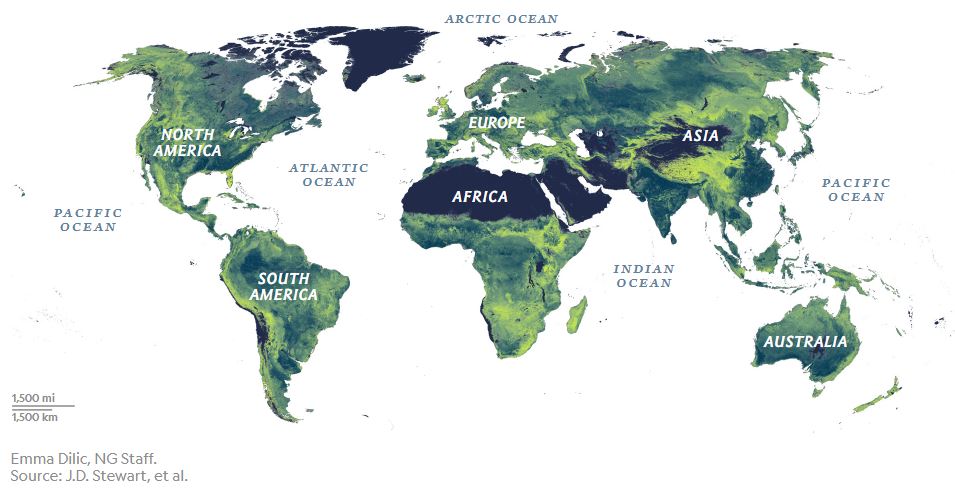
GLOBAL — The journal Science has published the first-ever global map detailing the true size and extent of underground fungal networks that sustain plants and help regulate climate. The study estimates the total network length at roughly 110 quadrillion kilometers — about 750 million times the distance from Earth to the Sun.
2.What is this fungal network?
Known as arbuscular mycorrhizal (AM) fungi, these subterranean filaments form symbiotic partnerships with over 70% of plant species. They receive carbon from plants and in return move nutrients — especially phosphorus and nitrogen — and water through soils, enabling plant growth and ecosystem stability.
3.Stunning facts & figures
Key numbers from the study: total network length ≈ 110 quadrillion km; ≈750 million times the Earth–Sun distance; present on Earth for ≈475 million years; connects over 70% of plant species; stores about 4 billion tonnes of CO₂ annually (≈11% of human CO₂ emissions); total fungal network mass ≈300 megatonnes of carbon — roughly 4–6× total human biomass.
4.How the research was conducted
An international team, including the Society for the Protection of Underground Networks (SPUN), analyzed more than 16,000 soil samples, used robotic sampling technology, and processed the results with advanced machine‑learning models to create a high‑resolution global map of network density and extent.
5.A striking quotation
"A teaspoon of soil can contain approximately 10 meters of mycorrhizal fungal network," said Dr. Justin Stewart, lead author of the study.
6.A critical warning
The study cautions that modern agricultural practices — mechanical tilling, overuse of chemical fertilizers, and fungicides — have reduced fungal network density in farmlands by an estimated 47.3% compared with natural ecosystems. This decline threatens carbon storage, water filtration, plant health, and climate regulation.
7.Consequences of declining networks
Lower fungal density reduces soil carbon sequestration, degrades natural filtration that protects water quality, undermines plant productivity, and weakens ecosystem resilience — exacerbating climate change and food‑security risks.
8.Where networks are most dense
The map shows particularly high concentrations in regions such as the Florida Everglades (USA) and parts of the South Sudan grasslands. The authors also note that grasslands contain roughly 40% of Earth's fungal biomass but are poorly conserved in many places.
9.The call to action
Co‑author Dr. Toby Kiers urges that protecting and restoring underground fungal communities must become a conservation priority, alongside the protection of above‑ground ecosystems, to safeguard climate mitigation, food security, and biodiversity.
10.Why this matters
The findings highlight that these invisible networks are essential to global carbon storage (≈11% of human CO₂ emissions), support most cropping systems, maintain water quality, and underpin terrestrial biodiversity — making their protection vital to humanity's environmental goals.
11.Key takeaways
✅ First global map of underground fungal networks published
✅ Network length ≈ 750 million times the Earth–Sun distance
✅ Stores ~4 billion tonnes of CO₂ per year (≈11% of human emissions)
✅ Origins ≈475 million years ago
✅ Farmland fungal density down ~47.3% from human activities
✅ Urgent conservation and restoration action needed worldwide
Editorial Standards & Fact-Checking Transparency
This report adheres to Daily Science News' rigorous academic guidelines. All claims are verified against primary scientific literature from institutions including NASA, ESA, CERN, and peer-reviewed journals. Supervised by Dulaksha Sandeepa. Questions or corrections? Contact contact@sciencenewshub.click.