A New Study on the Origin of 3I/ATLAS
Astronomers reveal that the interstellar comet 3I/ATLAS originated from an extremely cold and isolated region of the Milky Way and may be the oldest interstellar object ever encountered at approximately 11 billion years old.
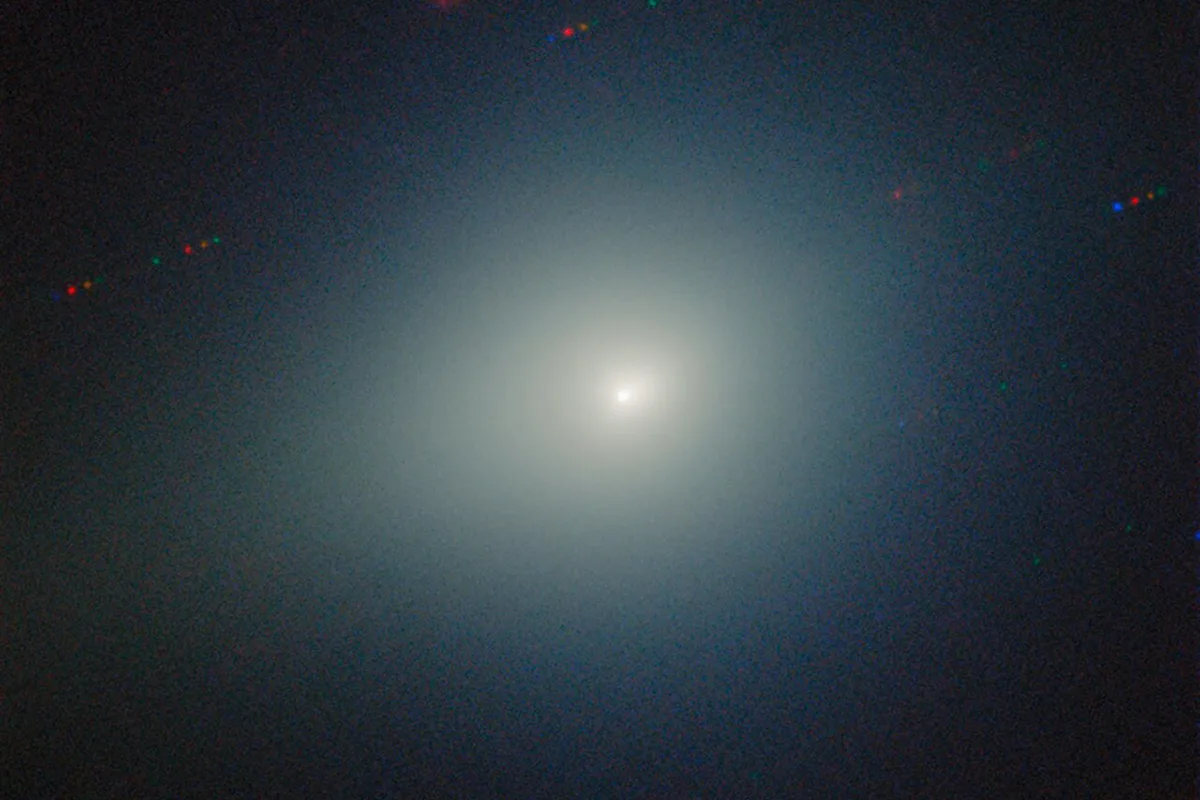
1.An Ancient Visitor from Deep Space
Astronomers say that the interstellar comet 3I/ATLAS, which passed through our solar system last year, originated from an extremely cold and isolated region of the Milky Way galaxy where no star system has yet formed. This remarkable object is the third interstellar object ever officially confirmed to have entered our solar system, following Oumuamua in 2017 and the Borisov comet in 2019. Scientists believe it is approximately 11 billion years old, making it more than double the age of our Sun.
2.Potentially the Oldest Interstellar Object
The extreme age of 3I/ATLAS makes it potentially the oldest interstellar object ever encountered by humanity. This ancient visitor carries within it evidence of conditions that existed in the early universe, billions of years before Earth and our solar system formed. The object's preservation through such vast stretches of cosmic time offers an unprecedented window into the distant past of our galaxy.
3.Heavy Hydrogen Reveals Formation Conditions
Research conducted by scientists from the University of Michigan using the ALMA Observatory in Chile revealed that the comet's ice contains an extraordinarily high amount of deuterium, also known as heavy hydrogen. Such a high deuterium content is a chemical signature that indicates this object was formed in an extremely low-temperature environment, even before our solar system came into existence.
4.Isolated Star System Origins
The researchers point out that while other stars existed in the vicinity when our Sun was born, the star belonging to the system where this comet originated was far more isolated. This extreme isolation is why such exceptionally cold conditions were able to develop in that region of space. The lack of nearby stellar radiation allowed temperatures to drop to levels that are rarely observed in the modern galaxy.
5.Physical Characteristics
According to data from the Hubble Space Telescope, the comet's nucleus ranges between 0.25 and 3.5 miles in size. The object is traveling at a phenomenal speed of 137,000 miles per hour, which gives it sufficient velocity to escape our solar system's gravitational influence permanently. This extreme velocity is typical of interstellar objects that have been traveling through the void of space for billions of years.
6.Orbital Path Through Our Solar System
Having passed Mars in October of last year and coming closest to Earth in December, the comet has now passed Jupiter and is on a path to permanently exit our solar system. This trajectory has provided astronomers with multiple opportunities to observe and study this remarkable visitor as it journeyed through the inner reaches of our solar neighborhood, collecting crucial data about its composition and behavior.
7.Insights into Early Universe Formation
As research team leader Theresa Panek-Careño notes, the unique chemical characteristics of this object will help uncover a wealth of new information about how planets formed in the early universe. The chemical composition preserved in 3I/ATLAS provides direct evidence of the conditions and materials present during the epoch of planet formation in distant regions of the Milky Way.
8.Understanding Planetary Formation
The study of deuterium and other isotopic ratios in cometary ice has long been a key tool in understanding planetary formation processes. By examining the chemical fingerprints of objects that formed under different conditions than our own solar system, scientists can develop more comprehensive models of how planets and planetary systems originate and evolve throughout the universe.
9.Comparative Interstellar Objects
3I/ATLAS joins a growing collection of confirmed interstellar visitors that have entered our solar system. Each object provides unique scientific value and teaches us something different about the diverse environments that exist beyond our star system. The discovery and study of such objects challenges our understanding of how rare or common interstellar visitors might be.
10.Publication and Future Research
The research report on the origins of this remarkable visitor was recently published in the journal Nature Astronomy, one of the world's leading publications for astronomical research. This publication makes the findings accessible to the broader scientific community and opens new avenues for follow-up research using next-generation telescopes and observational techniques.
Editorial Standards & Fact-Checking Transparency
This report adheres to Daily Science News' rigorous academic guidelines. All claims are verified against primary scientific literature from institutions including NASA, ESA, CERN, and peer-reviewed journals. Supervised by Dulaksha Sandeepa. Questions or corrections? Contact contact@sciencenewshub.click.