What Are the Mysterious 'Little Red Dots' from the Early Universe?
New research from the University of Texas suggests the mysterious 'Little Red Dots' observed by the James Webb Space Telescope have evolved into today's star clusters, solving a cosmic puzzle about the early universe.
1.The Mystery of Little Red Dots
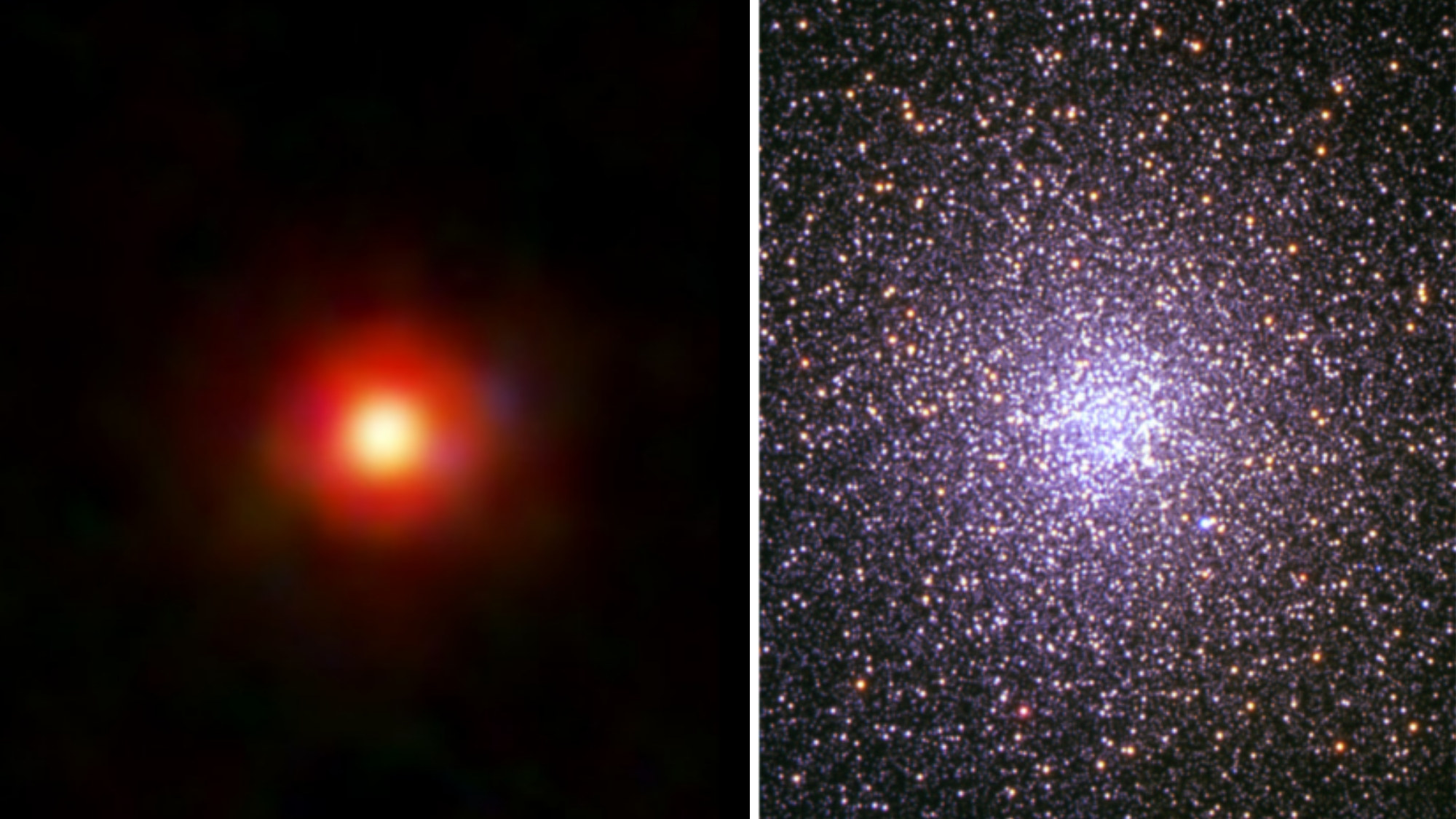
New research has suggested that the mysterious 'Little Red Dots' from the early universe observed by the James Webb Space Telescope have not completely disappeared, but have instead evolved into the star clusters we are familiar with today. When the James Webb Telescope began widely observing these 'Little Red Dots' in 2022 — representing a period approximately 600 million years after the Big Bang — it sparked intense curiosity among astronomers.
2.Why They Were So Puzzling
Their complete disappearance by the time the universe was approximately 2 billion years old was a primary reason for this. While various theories were proposed suggesting these dots could be black holes obscured by massive gas and dust clouds, a new theory presented by a research team from the University of Texas points in a very different direction.
3.Supermassive Stars as the Source
According to their view, these red dots could be nothing other than star clusters forming around a supermassive star. Such a supermassive star would be approximately 1,000 to 10,000 times the mass of our Sun, and would have an extremely short lifespan.
4.Solving the Puzzle of Ancient Star Clusters
Astronomers have not yet been able to fully understand how the densely packed star clusters — containing millions of old stars seen today in many galaxies including the Milky Way — came to be formed. This is because we have only been able to observe them after billions of years of evolution have already changed many of their fundamental characteristics. In particular, while the early universe consisted primarily of hydrogen and helium, the presence of unusually heavy elements such as nitrogen, sodium, and aluminum in certain stars within these clusters has been a source of wonder for scientists.
5.How Supermassive Stars Explain Unusual Chemistry
According to the new theory, supermassive stars formed through constant collisions within dense star clusters exist at extremely high temperatures, providing the conditions necessary for the creation of such an unusual elemental composition. When these giant stars — which exist for a brief period of just around one million years — are ultimately destroyed through supernova explosions, the elements produced within them are released into space. Research team leader John Chisholm points out that these elements contribute to the formation of the next generation of stars, which explains the unusual chemical composition seen in today's star clusters.
6.Connecting the Dots: From Red Dots to Star Clusters
During the brief period that this supermassive star exists, it appears as a 'Little Red Dot,' and after the star's destruction, although the star cluster persists for billions of years, it no longer appears as a red dot, Chisholm notes. Furthermore, researchers point out that there are similarities between the distribution of these red dots in the early universe and the distribution of present-day star clusters, as well as between their masses. They also note that the time period when the red dots appear — approximately 600 million years after the Big Bang — coincides with what is considered the beginning of star cluster formation.
7.Future Research and Conclusions
Although it is too early to reach a definitive conclusion on this matter, scientists believe this new theory will provide answers to a host of mysteries that have until now remained unsolved.
Editorial Standards & Fact-Checking Transparency
This report adheres to Daily Science News' rigorous academic guidelines. All claims are verified against primary scientific literature from institutions including NASA, ESA, CERN, and peer-reviewed journals. Supervised by Dulaksha Sandeepa. Questions or corrections? Contact contact@sciencenewshub.click.