Volcanic Eruptions in the Pacific Ring of Fire Have Been Cooling the Earth for Centuries
A new study from the University of Basel reveals that volcanic eruptions in the Pacific Ring of Fire caused over 22 mysterious long-term cooling periods across the past 12,000 years, with more than 80% of glacier expansion events coinciding with major volcanic events.
1.Volcanic Eruptions as Earth's Cooling Agents
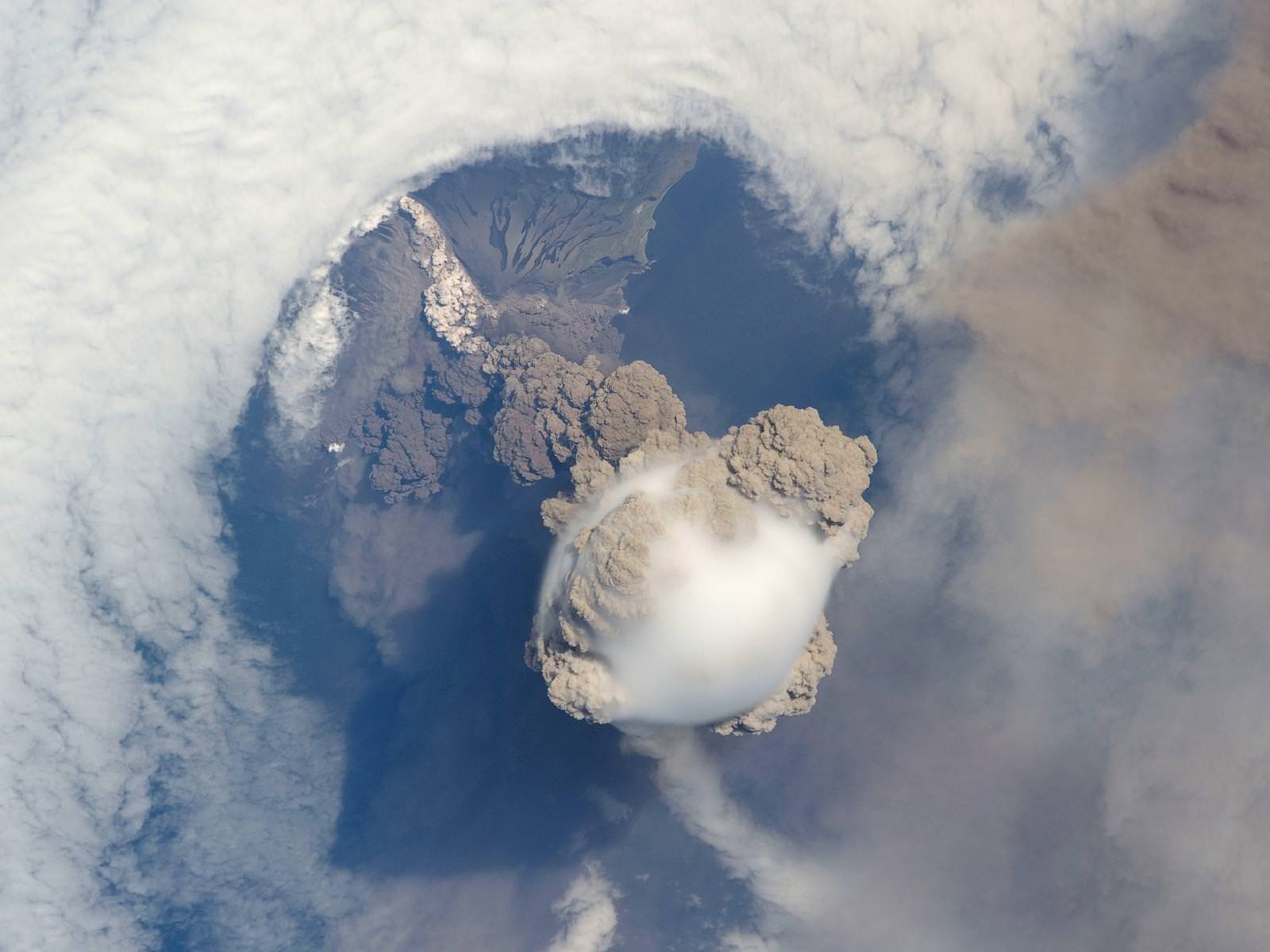
A new study has shown that volcanic eruptions in the Pacific Ring of Fire have been a primary cause of mysterious long-term cooling periods that occurred over the past few millennia on Earth. This study, conducted by a team of researchers from the University of Basel in Switzerland, was published in the prestigious journal Nature Communications. The findings resolve a decades-long scientific mystery about the source of periodic ice ages and global cooling episodes during the Holocene era.
2.The Holocene's Unexplained Cold Spells
Since the Ice Age, Earth has been passing through a relatively warm period known as the 'Holocene' for the past approximately 12,000 years. However, during this era, approximately 22 instances of sudden temperature drops have been identified, and glaciers expanded dramatically during these periods lasting several centuries each. Although changes in solar activity or ocean currents were previously suspected as causes, scientists had not yet been able to find a definitive explanation for such prolonged cooling events until this groundbreaking study.
3.Analyzing 51 Massive Historical Eruptions
A research team including postdoctoral researcher Alice Paine analyzed data on 51 massive volcanic eruptions from the past to find an answer. Most of these occurred in the Ring of Fire — an active zone in the western Pacific Ocean where tectonic plates collide and produce the world's most powerful earthquakes and volcanic eruptions. Researchers used ice core samples from Arctic and Antarctic regions, as well as organic materials in ash deposits, to precisely calculate when these eruptions occurred and correlate them with known cooling events in the geological record.
4.The Striking Discovery: 80% Overlap
What they found was remarkable: more than 80% of the glacier growth and expansion periods coincided with at least one major volcanic eruption. This extraordinarily high statistical overlap provides compelling evidence that Ring of Fire volcanism is the primary driver of centennial-scale cooling events throughout the Holocene. The correlation is far too strong to be coincidental, and the researchers have proposed a detailed physical mechanism to explain how volcanic eruptions could trigger cooling periods lasting decades to centuries.
5.The Sulfur Aerosol Mechanism
The researchers explained the cascading mechanism in detail: during a volcanic eruption, a massive amount of sulfur particles enters the stratosphere and reflects incoming sunlight back into space, causing the Earth's surface — particularly in the Northern Hemisphere — to cool significantly. This cooling in turn causes the Arctic sea ice sheet to expand dramatically, which disrupts the release of heat from the ocean to the atmosphere and fundamentally changes major ocean current patterns, including the Atlantic Meridional Overturning Circulation (AMOC).
6.A Snowball Effect That Lasts Centuries
"All these effects are interconnected and gradually build up like a rolling snowball. Although sulfur particles initiate the process, even after they leave the atmosphere, the impact on Earth persists for decades or centuries," says Alice Paine. This self-reinforcing feedback loop — where volcanic cooling triggers ice expansion, which changes ocean currents, which further suppresses warming — explains why relatively brief volcanic events can trigger cooling periods lasting hundreds of years. The findings have profound implications for our understanding of both past climate variability and future climate change.
7.Implications for Modern Climate Science
This study has significant implications for understanding Earth's climate system and its sensitivity to sudden forcing events. It demonstrates that the planet's climate can shift dramatically due to natural events and sustain those shifts through complex feedback mechanisms. The research also raises important questions about whether future volcanic eruptions in the Ring of Fire could temporarily offset human-caused global warming — a possibility that climate scientists are beginning to investigate with urgency as the climate crisis deepens.
Editorial Standards & Fact-Checking Transparency
This report adheres to Daily Science News' rigorous academic guidelines. All claims are verified against primary scientific literature from institutions including NASA, ESA, CERN, and peer-reviewed journals. Supervised by Dulaksha Sandeepa. Questions or corrections? Contact contact@sciencenewshub.click.