An Effort to Reclassify Pluto as a Planet Once Again
NASA Administrator Jared Isaacman publicly declares that Pluto should be restored to planetary status, reigniting the decades-old debate over the dwarf planet's classification and Pluto's place in our solar system.
1.NASA Administrator's Bold Statement
NASA Administrator Jared Isaacman has publicly declared that Pluto should be restored to its former status and recognition as a planet. Isaacman — a billionaire tech entrepreneur and astronaut who was appointed NASA Administrator last December — made this historic statement at a Senate subcommittee hearing held on April 28, during a discussion regarding NASA's budget requests for 2027. At the end of the session, responding to a question about Pluto posed by Senator Jerry Moran, he stated that he firmly believes Pluto should be made a planet once again.
2.A Historical Discovery
Pluto, discovered in 1930 by American astronomer Clyde Tombaugh, has held a special place in the hearts of Americans and in the collective imagination of humanity. For over seventy years, Pluto was celebrated as the ninth planet in our solar system, earning a place in popular culture and scientific textbooks worldwide. Tombaugh's discovery represented one of the last major discoveries in the classical astronomical tradition of telescopic observation.
3.The 2006 Reclassification
However, in 2006, the International Astronomical Union (IAU) stripped Pluto of its planetary status and reclassified it as a dwarf planet. This controversial decision fundamentally changed how we conceptualize our solar system. The reclassification was based on new criteria that the IAU established to provide a more rigorous scientific definition of what constitutes a planet.
4.The Three IAU Criteria
Under the new criteria introduced by the IAU, a celestial body must meet three conditions to be classified as a planet: it must orbit the Sun, it must have sufficient mass to be spherical in shape, and it must have cleared the debris from the area around its orbit. Pluto successfully meets the first two criteria but fails the third. It shares its orbital space with many other dwarf planets in the Kuiper Belt, a region of icy bodies beyond Neptune's orbit.
5.Ongoing Scientific Controversy
This decision sparked intense controversy at the time, and arguments still arise today that the criteria are unscientific and have been applied inconsistently. The debate over Pluto's classification has become a focal point in discussions about how we define planetary status and what criteria should determine such classifications. Many scientists argue that the IAU's definition is too restrictive and fails to capture the scientific significance of bodies like Pluto.
6.Arguments in Pluto's Favor
Pluto supporters point out that major planets like Earth and Jupiter also share their orbital space with numerous asteroids and smaller bodies. They question why Pluto alone is being singled out based on this criterion when the larger planets have not been subjected to the same reclassification standard. This inconsistency in the application of criteria has become a central argument in campaigns to restore Pluto's planetary status.
7.New Horizons Revelations
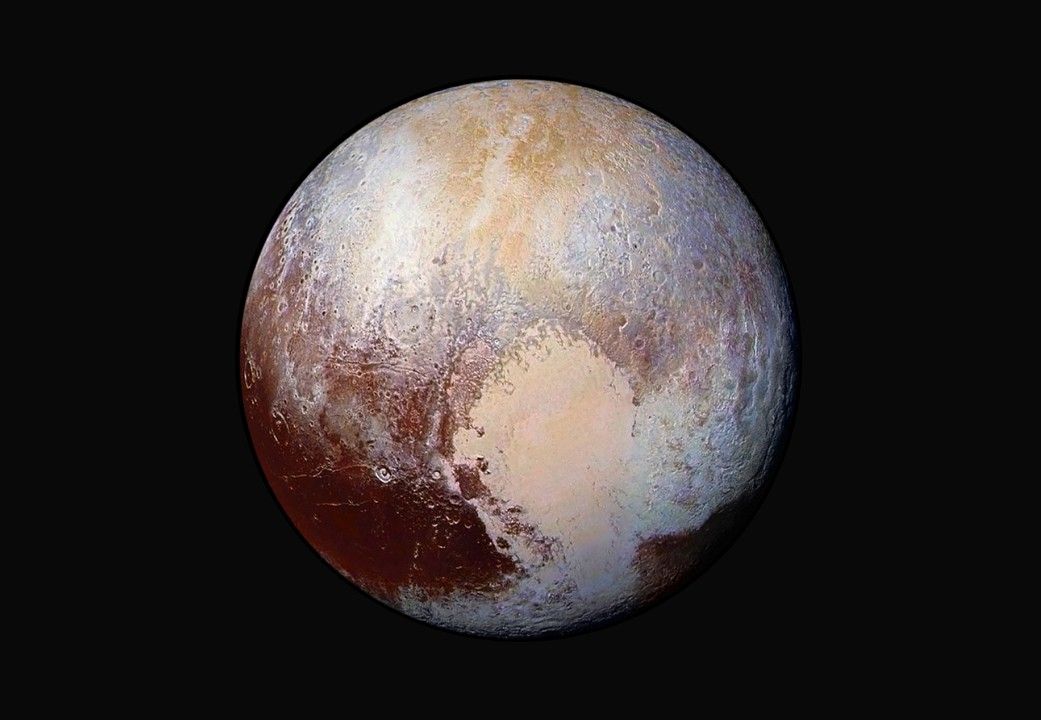
In 2015, images captured by NASA's New Horizons spacecraft as it flew past Pluto revealed it to be a remarkably complex world with unexpected geological richness. The images showed nitrogen ice glaciers, towering mountain ranges, diverse geological characteristics, and a dynamic atmosphere. These discoveries demonstrated that Pluto is far more scientifically interesting and complex than pre-flyby observations had suggested.
8.Scientific Complexity Revealed
The New Horizons data transformed our understanding of Pluto from a small, frozen, geologically dead world into an active, geologically diverse body worthy of serious scientific study. Features like the massive Sputnik Planitia glacier and Cthulhu Macula show evidence of complex processes operating on Pluto. This scientific richness has strengthened arguments that Pluto deserves recognition as a planet based on its intrinsic scientific interest and complexity.
9.Honoring Clyde Tombaugh
Isaacman further emphasized that he hopes to bring this discussion back into the scientific community in order to restore the recognition that Clyde Tombaugh — the discoverer of Pluto — rightfully deserves. Tombaugh's discovery was a crowning achievement in astronomical exploration, and Isaacman argues that Pluto's demotion dishonors that legacy. Restoring Pluto's planetary status would be a way to recognize Tombaugh's contribution to our understanding of the solar system.
10.Research and Future Efforts
Isaacman revealed that several research papers are currently being prepared, and that NASA intends to use them to advance this discussion further within the scientific community. These papers will present scientific arguments for reconsidering Pluto's classification, potentially providing new frameworks for thinking about planetary definition that might accommodate bodies like Pluto while maintaining scientific rigor.
11.The IAU's Final Authority
However, since the final authority over Pluto's classification rests with the International Astronomical Union (IAU), how successful NASA Administrator Isaacman's efforts will prove to be remains uncertain for now. The IAU would need to convene and vote to modify or revoke their 2006 decision, a process that would require substantial scientific consensus and evidence. The coming months and years will likely see intensified scientific debate on this fascinating question of planetary classification.
Editorial Standards & Fact-Checking Transparency
This report adheres to Daily Science News' rigorous academic guidelines. All claims are verified against primary scientific literature from institutions including NASA, ESA, CERN, and peer-reviewed journals. Supervised by Dulaksha Sandeepa. Questions or corrections? Contact contact@sciencenewshub.click.