Evidence Found That Red Dwarf Stars Are Swallowing Planets
Astronomers have discovered evidence that red dwarf stars are swallowing planets that orbit them, using data from the Gaia-ESO Spectroscopic Survey revealing unusually high levels of lithium in these stars' atmospheres.
1.Historic Discovery: Red Dwarfs Consuming Planets
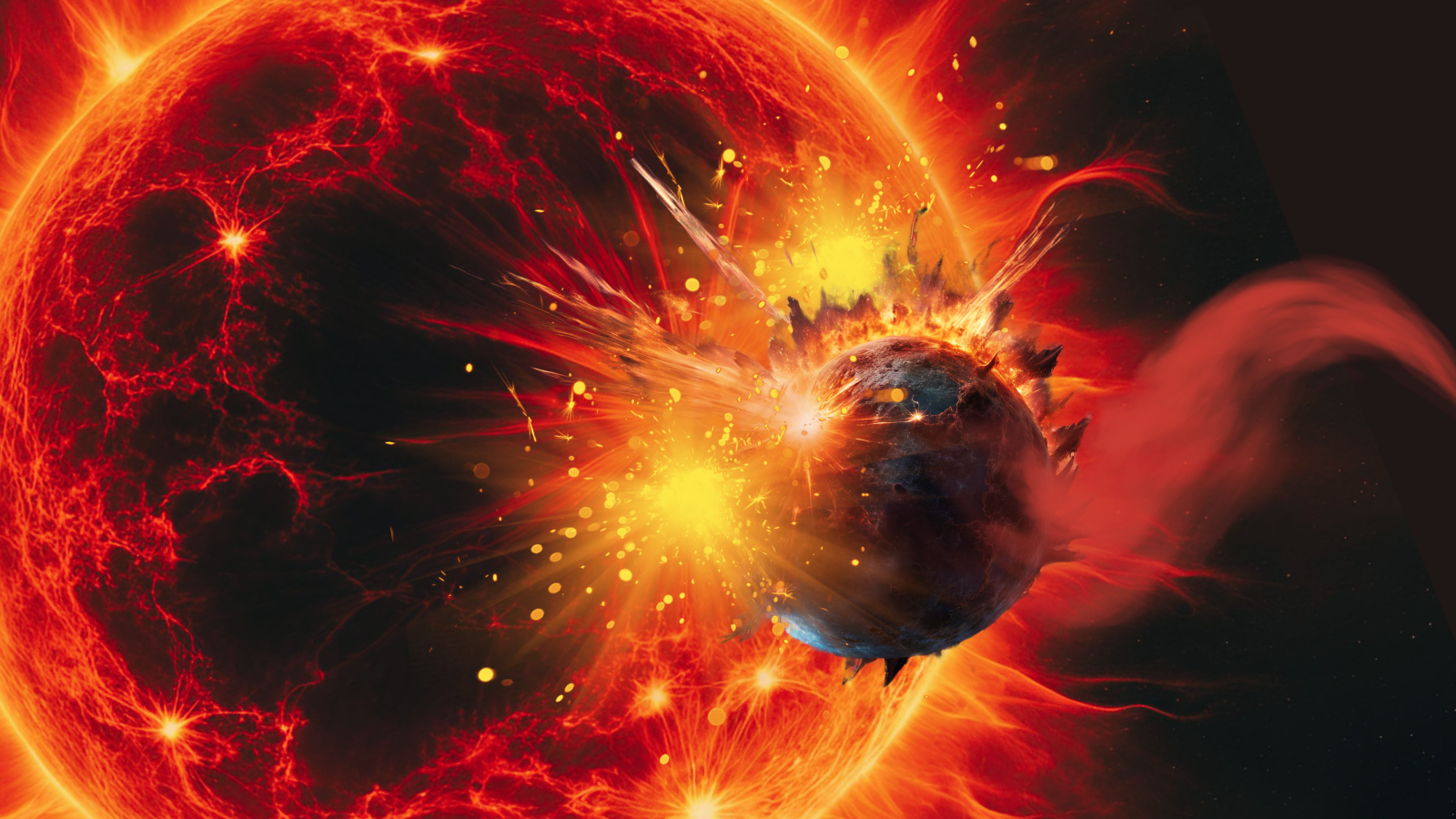
Astronomers have confirmed a long-held suspicion among scientists by discovering evidence that red dwarf stars — a small and dim type of star found throughout the universe — are swallowing planets that orbit them. This groundbreaking finding comes from the analysis of data collected by the Gaia-ESO Spectroscopic Survey (GES), which has revealed unusually high levels of lithium in the atmospheres of these stars. The discovery represents a significant advancement in our understanding of planetary systems and stellar evolution, providing the first direct observational evidence of a process that scientists have theorized for decades.
2.The Lithium Signature: Key Evidence
The critical clue to this discovery lies in the detection of lithium in the atmospheres of red dwarf stars. Because the interiors of red dwarf stars are extremely hot, any lithium present at their formation should be quickly destroyed through natural nuclear processes. Therefore, scientists believe that if lithium is present in the atmospheres of these stars, it could only have gotten there through an alternative source. The research team concluded that this lithium must have originated from the swallowing of lithium-rich planets. Robin Jeffries, lead researcher at Keele University in England, describes the detection of lithium in these stars as a striking feature — 'like painting on a blank canvas.' This vivid metaphor highlights how unusual and significant the presence of this element is, standing out dramatically against the expected stellar composition.
3.The Research Findings
Scientists who analyzed six red dwarf stars discovered across three star clusters concluded that these stars have consumed planetary material equivalent to three to ten times the mass of Earth. This massive consumption represents a significant amount of planetary debris, suggesting that the planet-swallowing process is not a rare occurrence but rather a substantial phenomenon. The study examined stars from different star clusters, providing diverse examples of this planetary consumption process. The variation in the amount of consumed material—ranging from three to ten Earth masses—suggests that different red dwarf stars consume planets of different sizes, and that multiple planetary consumption events may occur over a star's lifetime.
4.The Significance for Our Galaxy
This discovery is particularly significant because approximately 75% of all stars in our Milky Way galaxy are red dwarf stars. If red dwarf stars routinely consume planets, this means that planetary system destruction is an extremely common occurrence throughout the universe. The widespread prevalence of red dwarf stars combined with evidence of planet swallowing suggests that many planetary systems may not survive the evolutionary processes that red dwarf stars undergo. This finding has profound implications for our understanding of planetary survival rates and the stability of planetary systems around the most common type of star in our galaxy.
5.Scientific Implications and New Insights
The study was published on May 28 in the journal Monthly Notices of the Royal Astronomical Society, making it available to the global scientific community for peer review and further study. Researchers now believe that this destructive process of planet swallowing may be an extremely common occurrence throughout the universe. This discovery is expected to provide scientists with new insights into the early stages of planetary systems and their evolution. Understanding how planetary systems change and evolve, particularly around the most abundant type of star, is crucial for comprehending planetary system formation and long-term stability.
6.Red Dwarf Stars: The Universe's Most Common Stars
Red dwarf stars are small, cool stars with much lower temperatures and luminosity than stars like our Sun. Despite their apparent unimportance due to their modest appearance, red dwarf stars are incredibly numerous. Their abundance makes them statistically the most important type of star for understanding the universe. Red dwarfs have extremely long lifespans — potentially trillions of years — compared to stars like our Sun, which has a lifespan of approximately 10 billion years. This extreme longevity means that processes occurring around red dwarf stars happen on timescales that may dwarf the age of the current universe.
7.Planetary System Evolution and Dynamics
The discovery of planet-swallowing red dwarf stars provides crucial insights into planetary system evolution. Many planetary systems may not be stable over astronomical timescales, particularly those orbiting red dwarf stars. The mechanisms that cause planets to spiral into their host stars could involve gravitational interactions, atmospheric drag, or tidal forces. Understanding these mechanisms is essential for explaining the observed diversity of exoplanetary systems and predicting which planetary systems might remain stable and which might not.
8.Keele University's Research Leadership
Keele University's research team, led by Robin Jeffries, has made significant contributions to our understanding of stellar evolution and exoplanetary systems. The university's involvement in the Gaia-ESO Spectroscopic Survey represents important collaborative research that combines data from multiple sources to answer fundamental questions about stellar and planetary processes. The collaborative nature of this research, involving multiple institutions and international cooperation, demonstrates how modern astronomy relies on teamwork and shared data resources.
9.The Gaia-ESO Spectroscopic Survey
The Gaia-ESO Survey represents a comprehensive spectroscopic survey program designed to characterize stellar properties across our galaxy. The survey combines detailed spectroscopic observations with astrometric data from the Gaia satellite mission, providing unprecedented insights into stellar composition, age, and physical properties. The survey's ability to detect subtle chemical signatures like the lithium abundance in stellar atmospheres demonstrates the power of modern astronomical instrumentation and analysis techniques. The data collected by this survey will support astronomical research for decades to come.
10.Future Research and Implications
This discovery opens new avenues for astronomical research. Scientists will likely conduct more detailed studies of red dwarf stars to understand the frequency and mechanisms of planet consumption. Future observations may reveal details about which types of planets are most likely to be consumed and at what distances from their host stars this process typically occurs. Additionally, this research has implications for the search for habitable planets around red dwarf stars, as it suggests that planetary survival may be a significant factor in determining which planetary systems remain intact and potentially habitable over long timescales.
11.Broadening Our Understanding of Planetary Systems
The discovery that red dwarf stars consume planets fundamentally changes our understanding of how planetary systems evolve. For decades, astronomers assumed that planetary systems, once formed, remain relatively stable. However, this research suggests that stability is not guaranteed, particularly for planets orbiting red dwarf stars. The implications extend beyond red dwarfs — if planets can be consumed by red dwarfs, similar processes may affect planetary systems around other types of stars as well. This discovery invites us to reconsider our assumptions about planetary system longevity and to investigate the diverse fates that planetary systems may experience as they age.
Editorial Standards & Fact-Checking Transparency
This report adheres to Daily Science News' rigorous academic guidelines. All claims are verified against primary scientific literature from institutions including NASA, ESA, CERN, and peer-reviewed journals. Supervised by Dulaksha Sandeepa. Questions or corrections? Contact contact@sciencenewshub.click.