T. Rex's Tiny Arms — An Evolutionary Sacrifice for a Powerful Skull
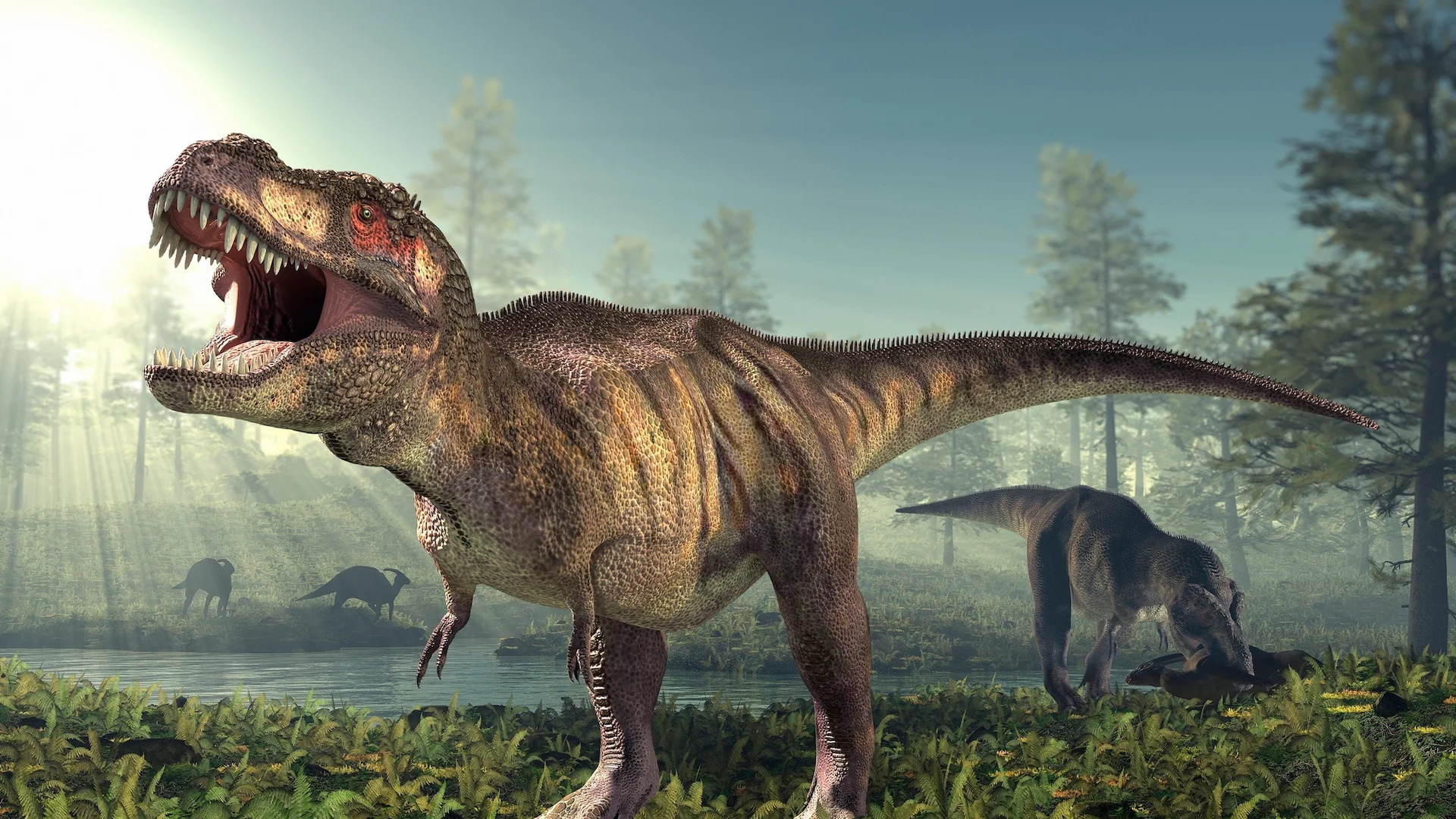
A new study has solved the mystery of T. rex's disproportionately small arms, revealing they were the result of an evolutionary trade-off that allowed their skulls to evolve into a more powerful and larger form.
1.The Mystery of T. Rex's Tiny Arms
For over a century, the disproportionately small arms of Tyrannosaurus rex have been a subject of intense scientific debate and widespread public curiosity. Despite possessing a body exceeding 40 feet in length, T. rex's arms measured only about 3 feet—less than one-third the length of its legs. This anatomical peculiarity has sparked countless theories and even become the subject of popular ridicule. However, a groundbreaking new study published in the journal Proceedings of the Royal Society B has finally provided a compelling scientific explanation for this unusual characteristic.
2.The Evolutionary Trade-Off Theory
According to the research led by Charlie Roger Scherer of University College London, T. rex's tiny arms were not a evolutionary accident or evolutionary dead-end, but rather the result of a strategic evolutionary trade-off. In evolution, an animal cannot simultaneously strengthen all of its body parts. As Scherer explains: 'If you are focusing on hunting large prey with your head, there is no need to spend enormous energy maintaining arms and claws.' The study presents compelling evidence that evolution redirected the energy that would have gone into maintaining and developing functional arms toward developing a more powerful skull and an increasingly deadly bite force.
3.The Biomechanical Analysis
Researchers conducted a comprehensive analysis of 85 different dinosaur species to test their evolutionary trade-off hypothesis. The results provided striking confirmation of their theory: as skull strength increased across these species, arm size consistently decreased. This inverse relationship demonstrated a clear biomechanical principle—that resources devoted to cranial development came at the expense of forelimb development. The data revealed a consistent pattern across multiple dinosaur lineages, suggesting this trade-off represented an efficient evolutionary solution to predatory hunting challenges that persisted across millions of years of dinosaur evolution.
4.A Pattern Across Multiple Carnivorous Dinosaur Groups
The evolutionary trait of small arms in relation to powerful skulls is not unique to T. rex, according to the research. The study identified this same pattern in four other groups of carnivorous dinosaurs: ceratosaurids, megalosaurids, abelisaurids, and carcharodontosaurids. These diverse dinosaur groups were distributed across the world over a span of 180 million years, representing different evolutionary lineages and temporal periods. Yet nearly all of them developed powerful skulls as their primary hunting weapon while simultaneously reducing the size and functional importance of their arms. This widespread pattern across multiple independent dinosaur groups strongly supports the hypothesis that the skull-versus-arms trade-off represented an optimal evolutionary solution for large carnivorous dinosaurs.
5.The Comparison to Modern Sharks
Professor Steve Brusatte of the University of Edinburgh offers an illuminating comparison to describe T. rex's hunting strategy: 'T. rex is like a land-dwelling shark that does all its work with its enormous head.' Just as modern sharks rely almost exclusively on their massive jaws and teeth for predation, with relatively undeveloped forelimbs, T. rex evolved to be a specialized head-hunting predator. Brusatte further notes that as the skull grew larger and more powerful, it increasingly took over the role of catching and subduing prey that the arms had previously performed in earlier dinosaur ancestors. This comparison to marine predators provides an intuitive understanding of T. rex's hunting strategy and the functional efficiency of this body plan.
6.Energy Expenditure and Evolutionary Efficiency
Stefan Lautenschlager of the University of Birmingham highlights another crucial aspect of this evolutionary adaptation: growing and maintaining various body parts requires significant expenditure of energy and metabolic resources. When the functional role of the arms becomes minimal for capturing and subduing prey, redirecting that energy toward increasing bite force represents a more efficient evolutionary strategy. The energy saved by not developing and maintaining large, powerful arms could instead be invested in developing the musculature, bone structure, and neural control systems necessary for an increasingly powerful bite force. This metabolic reallocation would provide T. rex with a substantial selective advantage in capturing and subduing large prey, making it the most efficient use of available biological resources.
7.The Role of Herbivorous Dinosaurs
Interestingly, herbivorous dinosaurs present a contrasting evolutionary strategy. Unlike their carnivorous cousins, herbivorous dinosaurs continued to retain their long arms and well-developed forelimbs. These appendages served crucial functions in herbivorous feeding ecology—reaching higher vegetation for browsing, manipulating plants during feeding, and providing defensive capabilities against predators. The different selective pressures faced by herbivorous versus carnivorous dinosaurs led to divergent evolutionary solutions, with herbivores maintaining the ancestral morphology of functional forelimbs while carnivores specialized toward head-based predation.
8.The Functional Purpose of T. Rex's Arms
Despite being dramatically reduced in size, T. rex's tiny arms were not completely useless or vestigial. The research indicates that these diminutive appendages likely retained some functional purpose, though their exact role remains uncertain. Proposed functions have included gripping during mating, assisting in rising from the ground after lying down, or holding smaller prey items. However, the study makes clear that whatever function these arms may have served was far less critical than the predatory role played by the enormous skull and powerful jaws. The arms represented a compromise between complete loss—which might have created developmental or physiological problems—and maintaining fully functional forelimbs, which would have required expensive metabolic investment.
9.Developmental and Genetic Constraints
The evolutionary reduction of T. rex's arms also likely reflects developmental and genetic constraints operating during embryonic growth. Genes controlling limb development interact with genes controlling skull development, and the allocation of developmental resources toward cranial expansion may have automatically resulted in reduced forelimb development. Evolution does not design organisms from scratch but rather modifies existing developmental programs. The reduction of T. rex's arms may not have required the evolution of specific 'arm-reduction' genes but rather the modification of developmental timing and resource allocation patterns that naturally resulted in smaller arms as a byproduct of skull enlargement selection.
10.Implications for Understanding Dinosaur Evolution
This study provides valuable insights into how evolution shapes animal body plans in response to ecological challenges and selective pressures. It demonstrates that seemingly 'imperfect' or 'awkward' features like T. rex's tiny arms can be understood as sophisticated adaptations that maximize predatory efficiency. The research emphasizes that evolution is not a process of perfect design but rather of trade-offs and compromises that produce organisms optimized for their specific ecological roles. The diversity of solutions developed by different dinosaur groups—from the massive skulls of T. rex to the different predatory strategies of other theropods—illustrates the creative power of evolutionary processes.
11.Why This Discovery Matters
This research transforms our understanding of T. rex from a dinosaur with anatomically 'wrong' proportions into a specialized predator with body proportions precisely optimized for its hunting strategy. It demonstrates that paleontologists can use modern comparative anatomy and biomechanical analysis to understand ancient organisms' biology. The study also illustrates how scientists solve long-standing paleontological mysteries through hypothesis testing and large-scale data analysis. By examining patterns across 85 different species, researchers can identify general principles of dinosaur evolution that apply across deep time and multiple lineages.
12.The Broader Evolutionary Lesson
Perhaps most importantly, this study reveals that dinosaurs found diverse and innovative evolutionary solutions to address the same environmental challenges they faced. Different predatory dinosaurs living in different continents and time periods all converged on similar solutions—powerful skulls combined with reduced forelimbs—because this body plan represented an efficient predatory strategy. Conversely, some dinosaur groups maintained different morphologies, suggesting multiple viable evolutionary solutions existed. This principle—that evolution can produce multiple solutions to similar problems—helps scientists understand the diversity of life and the creative processes by which evolution shaped organisms to fill available ecological niches throughout Earth's history.
Editorial Standards & Fact-Checking Transparency
This report adheres to Daily Science News' rigorous academic guidelines. All claims are verified against primary scientific literature from institutions including NASA, ESA, CERN, and peer-reviewed journals. Supervised by Dulaksha Sandeepa. Questions or corrections? Contact contact@sciencenewshub.click.