A Tiny Object at the Edge of the Solar System Has an Atmosphere
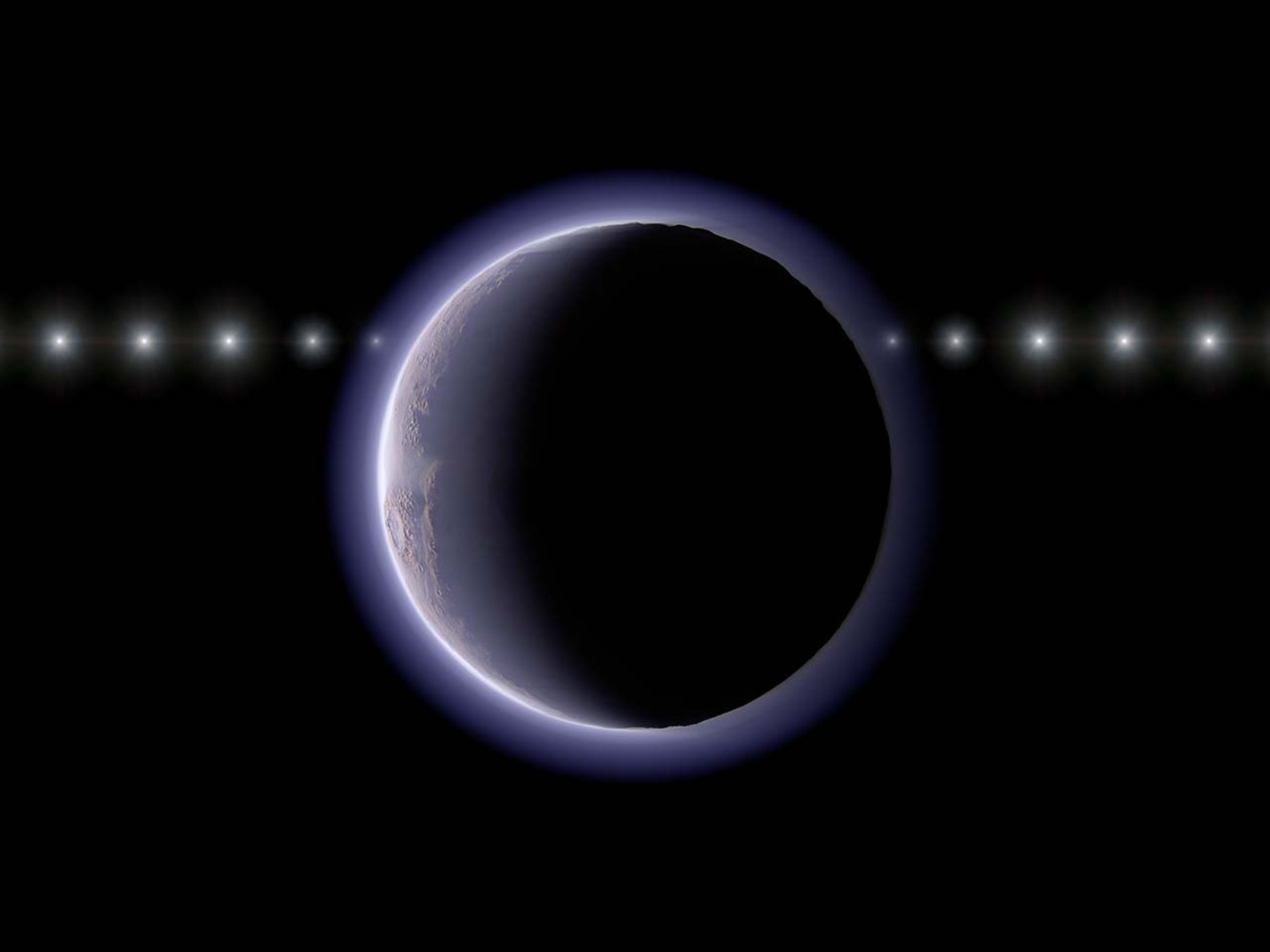
Scientists have discovered that a mysterious atmosphere has formed around an extremely small celestial object located at the far edge of the solar system. The object, designated (612533) 2002 XV93, is a plutino in the Kuiper Belt.
1.Discovery of an Unexpected Atmosphere
Scientists have discovered that a mysterious atmosphere has formed around an extremely small celestial object located at the far edge of the solar system. The object, designated (612533) 2002 XV93, belongs to the Kuiper Belt, which lies beyond the orbit of Neptune. This groundbreaking discovery challenges long-held assumptions about which celestial bodies can maintain atmospheres.
2.Understanding Plutinos
This object is classified as a 'plutino,' meaning it maintains a 2:3 orbital resonance with Neptune, just like Pluto. In other words, for every three orbits Neptune completes around the Sun, this object completes two. While relatively large bodies like Pluto are known to have thin atmospheres, scientists are astonished that such a small object could have one at all.
3.The Detection Method
The discovery was made on January 10, 2024, by a team of professional and amateur astronomers including Ko Arimatsu of the National Astronomical Observatory of Japan. The atmosphere was detected when the object passed in front of a star. Instead of the star's light cutting off abruptly, it faded gradually — confirming the presence of a thin atmosphere around the object that was blocking the light.
4.Atmosphere Composition and Characteristics
This atmosphere is 5 to 10 million times thinner than Earth's, with a surface pressure of between 100 and 200 nanobars. Though far thinner than even Pluto's atmosphere, the mere existence of any atmosphere around such a small object is remarkable. The composition of this atmosphere has not yet been determined, leaving researchers with a fascinating puzzle to solve.
5.Possible Origins
Previous observations by the James Webb Space Telescope found no traces of ice on its surface that could turn into gas. Scientists suggest the atmosphere may have been created either through cryovolcanism — where gases from the interior are released — or as a temporary atmosphere resulting from a recent comet impact. Both mechanisms represent extraordinary phenomena for such a small celestial body.
6.Challenging Traditional Beliefs
Researchers note that this discovery challenges the traditional belief that only large planets can have atmospheres. This finding opens new questions about atmospheric formation and persistence on small bodies throughout the solar system, suggesting that our understanding of planetary science may need revision.
7.Future Research Directions
Scientists hope to resolve this mystery in the future by using the James Webb Space Telescope to observe how the atmosphere's composition and density change over time. These observations could provide crucial insights into the processes governing atmosphere formation and maintenance on small distant objects, potentially revealing new aspects of solar system formation and evolution.
Editorial Standards & Fact-Checking Transparency
This report adheres to Daily Science News' rigorous academic guidelines. All claims are verified against primary scientific literature from institutions including NASA, ESA, CERN, and peer-reviewed journals. Supervised by Dulaksha Sandeepa. Questions or corrections? Contact contact@sciencenewshub.click.